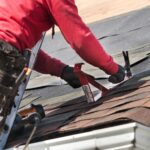
Texas weather doesn’t give much warning. One week it’s triple-digit heat, the next it’s hail the size of golf balls tearing through The Woodlands, Conroe, or Cypress. The roofs that hold up best aren’t necessarily the newest ones — they’re the ones that got small problems fixed before a storm turned them into big ones.
Here are five warning signs worth walking outside to check for today.
1. Missing or Curling Shingles
After a windstorm, it’s normal to lose a shingle or two. What’s not normal is shingles that are curling at the edges, cracking, or missing granules (you’ll often spot the granules collecting in your gutters like coarse sand). This usually means the shingles are past their effective lifespan and are no longer sealing tightly against wind-driven rain.
Why it matters: A single compromised shingle gives water a way in. Once moisture reaches the decking underneath, repairs get more expensive fast.
2. Granule Loss in the Gutters
Asphalt shingles are coated with granules that protect them from UV damage and give them their fire resistance. As shingles age, they shed these granules — a little is normal, a lot is a red flag. If your gutters look like they’re filling with dark sand after every rain, your roof is wearing out faster than it should.
3. Sagging Rooflines
Stand across the street and look at your roofline. It should be straight and even. Any dip, sag, or wave usually points to a structural issue — often trapped moisture that’s weakened the decking or supports underneath. This isn’t a cosmetic issue; it’s a sign the roof’s ability to bear weight (including the next hailstorm) is compromised.
4. Water Stains on Ceilings or in the Attic
By the time a stain shows up on your ceiling, water has usually been finding its way in for a while. Check your attic after the next heavy rain for damp insulation, dark streaks on the rafters, or a musty smell. Attic leaks are often easier and cheaper to catch early than to discover after drywall damage.
5. Rising Energy Bills
A failing roof doesn’t just let water in — it lets conditioned air out. If your ventilation or insulation has been compromised by roof damage, your AC works harder to keep up, especially through a Texas summer. An unexplained jump in your energy bill is sometimes the first sign, not the last.
What to Do If You Spot Any of These
None of these signs mean you automatically need a full replacement — but they all mean it’s worth getting eyes on the roof before storm season makes the decision for you. A quick inspection can usually tell you whether you’re looking at a simple repair or something more involved.
Fortress Roofing serves homeowners across The Woodlands, Conroe, Magnolia, Spring, Tomball, and Cypress, and we’re built for exactly this kind of Texas weather. If you’ve noticed any of these warning signs — or just want peace of mind before the next storm rolls through — we’ll come take a look and give you a straight answer, not a sales pitch.
Schedule a free roof inspection today and get ahead of storm season.